
The Work Goes On
John Abowd on the AKM method and the importance of a ‘non-controversial’ U.S. Census
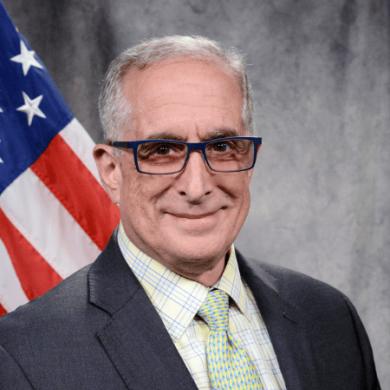
John Abowd, Edmund Ezra Day Professor Emeritus of Economics, Statistics, and Data Science at Cornell University, reflects on his academic career, his research on worker and firm effects on wages, employing a model that became known as the “AKM model,” and his U.S. Census Bureau tenure, focusing on 2020 Census controversies and the implications of adding a citizenship question.
In this episode, Abowd and Ashenfelter discuss:
- Abowd’s childhood in Michigan growing up as the oldest of 12 siblings.
- Abowd’s undergraduate days at Notre Dame and his graduate years at the University of Chicago where his advisor was Arnold Zellner. “I learned how to do careful empirical work from Arnold. He had some of the same instincts that later labor economists I worked with had. If you put a table in a paper…It should be clear.”
- His experience at the University of Chicago, where he spent 11 years during “the heyday of Becker labor economics” before settling at Cornell
- The origins of Abowd’s work with co-authors Francis Kramarz and David Margolis and the model they developed to analyze worker and firm effects (the AKM Model). “The statistical evidence is clear. There's an independent statistical effect from where you work… If you move from a high wage firm to a low wage firm, your wage changed in the amount predicted by the firm effect.”
- Abowd’s role as the government's only witness in a significant lawsuit filed in 2017, against the Census Bureau to prevent the late addition of a citizenship question to the 2020 census.
- His thoughts on the Supreme Court’s decision to strike the citizenship question on procedural grounds and the estimated fall off in the self-response rate if the question is added to the 2030 census. “You don't want to have a controversial census. Controversial censuses are really hard to conduct. You could change the playbook in spite of long held beliefs that the playbook really couldn't be changed. But you don't want to have to change the playbook.”
- His general thoughts on the way the census should operate: “I'm hoping that people from both sides of the political spectrum will understand the value of having a non-controversial census for most of the purposes that you want to use the data for.”
John Abowd earned his Ph.D. from the University of Chicago in 1977. He is Edmund Ezra Day Professor Emeritus of Economics, Statistics, and Data Science at Cornell University. He also served as the Associate Director for Research and Methodology and Chief Scientist at the United States Census Bureau, where he provided scientific leadership for the Longitudinal Employer-Household Dynamics Program. His research focuses on the creation, dissemination, privacy protection, and use of linked, longitudinal data on employees and employers. "The Work Goes On"—a podcast produced by Princeton's Industrial Relations Section (IR Section)—is an oral history of industrial relations and labor economics hosted by Princeton's Orley Ashenfelter.
-
Abowd, John M., Adams, T., Ashmead, R., Darais, D., Dey, S., Garfinkel, S., Goldschlag, N., Hawes, M. B., Kifer, D., Leclerc, P., Lew, E., Moore, S., Rodríguez, R. A., Tadros, R. N., & Vilhuber, L. (2025). A simulated reconstruction and reidentification attack on the 2010 U.S. Census. Harvard Data Science Review, 7(3).
-
Kevin L. McKinney and John M. Abowd, "Estimating the Potential Impact of Combined Race and Ethnicity Reporting on Long-Term Earnings Statistics," NBER Working Paper 32758 (2024)
-
Abowd, John M., Ashmead, Robert, Cumings-Menon, Ryan, Garfinkel, Simson, Heineck, Micah, Heiss, Christine, Zhuravlev, Pavel. 2010 Census Production Settings Demographic and Housing Characteristics (DHC) Demonstration Noisy Measurement File. Inter-university Consortium for Political and Social Research [distributor], 2023-08-03. https://doi.org/10.3886/ICPSR38865.v2.
-
Abowd, John M., Kramarz, F., Margolis, D.M. (1999) High wage workers and high wage firms. Econometrica : Journal of the Econometric Society, 67(2): 251-333.