
The Work Goes On
Truman Bewley on why some firms prefer to “get the misery out the door” instead of cutting pay
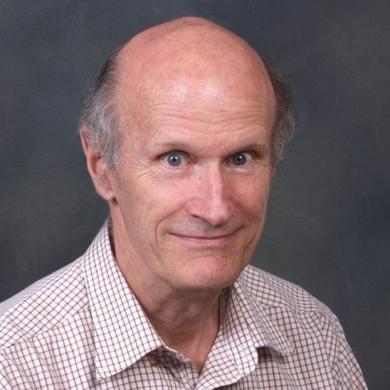
Truman Bewley, the Alfred C. Cowles Professor Emeritus of Economics at Yale University discusses his academic background, his work on economic theory and shift to empirical economics, and his studies on wage rigidity and price setting of commodities and differentiated products that involved hundreds of interviews with employers and workers over many years.
In this episode, Bewley and Ashenfelter discuss:
- Bewley’s interest in physics and French history while an undergraduate at Cornell and how that changed to economics for graduate school. “I was attracted by the sort of orderliness of mathematical economics. [It’s the] same reason I entertained an interest in physics when I was an undergraduate, but life is not so orderly, and somehow, I realized that when studying economics.”
- His work with economist Gerard Debreu at the University of California, Berkeley, who took him to the University of Louvain in Belgium where he worked on proving the existence of equilibrium in an infinite number of commodities.
- His labor study that investigated why some firms decide they can cut pay while others do not: “...you can do it [cut pay] without people thinking of it as a punishment and without having a disastrous effect on the morale of the employees if it's clear that the pay cut will save a lot of jobs.”
- His discoveries about why some employers would rather layoff workers than cut pay. “...And the guy said, ‘To get the misery out the door.’”
- His study on the price setting of differentiated goods compared to commodities: “In the commodity markets, they're just what you expect. Its price is decided on the market, and the price changes every five minutes … And in the differentiated goods they…don't want anybody to think that the price can change.”
Truman Bewley earned his Ph.D. from the University of California, Berkeley in1971. He is Alfred C. Cowles Professor Emeritus of Economics at Yale University and a Distinguished Fellow of the American Economic Association. He is renowned for his work in pure economic theory, including inventing a class of models, now known as “Bewley models,” that demonstrate how to construct economic equilibria with heterogeneous consumers facing earnings risk in the labor market. "The Work Goes On"—a podcast produced by Princeton's Industrial Relations Section (IR Section)—is an oral history of industrial relations and labor economics hosted by Princeton's Orley Ashenfelter.
-
Bewley, Truman F. (1977). "The Permanent Income Hypothesis: A Theoretical Formulation" Journal of Economic Theory 16 (2): 252–92.
-
Bewley, Truman F. Why Wages Don’t Fall During a Recession. Cambridge, MA: Harvard University Press, 1999.
-
Bewley, Truman F. General Equilibrium, Overlapping Generations Models, and Optimal Growth Theory. Cambridge, MA: Harvard University Press, 2007
-
Bewley, Truman F. Price Setting. Cambridge, UK: Polity Press, 2025.